Monday, October 30, 2017

Celebration Sanctuary


Emma
 By aBrown


                                                                                          Guardians of greyhounds,
                                                                                                  be aware this season
                                                                                                        of holiday dangers
                                                                                                              that lurk beyond reason.  


images.google.com
The holidays… a time of excitement and preparation for many of us.   Halloween with costumes, candy, and reverie, Thanksgiving’s foods, family get-togethers, and thankfulness, and finally Christmas, culminating all of our previous celebrations with joy.  We rush around completing our to-do lists in this short time of a few months, as our pets watch in confusion.

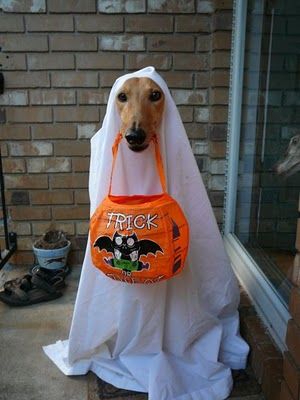
Although our dogs see and feel our excitement, they have no concept of why.   We dress them up to join us in our Halloween diversions not asking them of their preference.  At Thanksgiving, good intentioned relatives may feed them foods (dogs are always hungry) that aren’t healthy or wise for them to consume.  And at Christmas, decorations can pose their own series of complications.  Knowing how much we love our animals, it is a good time to think about the dangers that lurk for them at this fun and joyous time of year.  Following that thought, a reminder of some simple ways we can protect our fur kids during this holiday season might be helpful.

images.google.com
Halloween is right around the corner.   (I still haven’t completed my costume for a party tomorrow night, YIKES.)  It’s fun to dress up for Halloween, but that doesn’t mean that your dogs will like wearing costumes.  Both the ASPCA and PETMD suggest that you don’t dress up your animals unless you are sure that they like it.  It can cause undo stress if they can’t breathe, see, or hear properly.  Keep them away from pumpkins with candles or other lighted decorations.  Those yummy treats are a great enticement to them (as well as to me), so keep them out of reach.  Front door activity with scary creatures arriving every few minutes may cause anxiety to your dogs.  Make sure that their temperament is good for greeting ghouls and goblins and that they don’t escape through that door.  Having up-to-date id tags on them is a must, but putting them in a quiet room might be the safest bet.

Whew!  That was a lot of information, and that was just the first holiday.

images.google.com
Thanksgiving is all about family and food.  Again, that party atmosphere may be puzzling to your greyt-hounds causing unease, and the food smells are sure to drive them a little crazy.  (Just talking about this is making me gain weight.)   AKC reminds us that turkey bones can cause a choking hazard, so keep them away from your pets.  They can also splinter once digested.  Your holiday table as well as tempting garbage smells may lure your dogs into risky behavior.

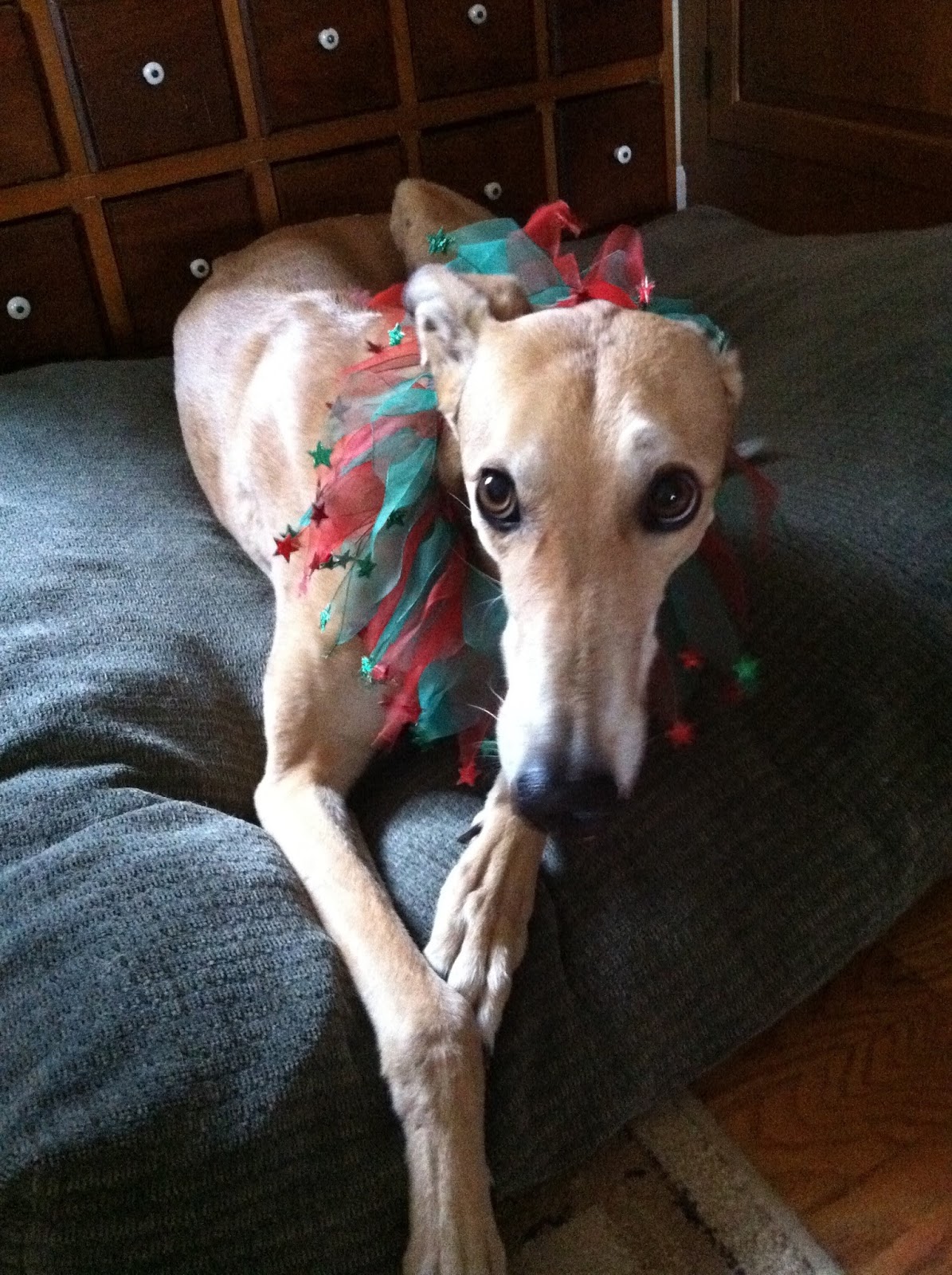
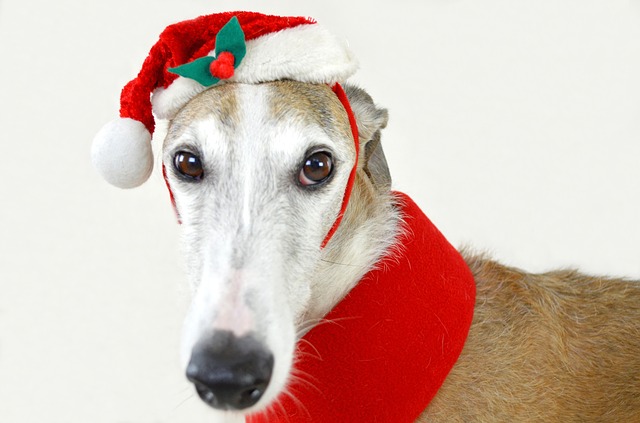
Now for Christmas.  That Christmas tree with all of the lights and ornaments means festive times to you, but can be a cause of danger to your greyhounds especially the ones who have just become members of your family.  They have never seen anything like this before and may inadvertently do some damage.  Take care to watch your animals around the tree.  Ornaments, tinsel, electrical cords can trigger your dogs curiosity and make them want to investigate.  Mistletoe and Holly can cause problems if ingested so opt for some artificial plants or keep them well out of reach.  Lastly, make sure that those pretty burning candles are not left unattended.
images.google.com

Did I scare you yet?  This post was not to scare you off from your holiday fun, but rather to avoid potential problems before they happen.  We humans get so wrapped up in our responsibilities that we sometimes overlook simple things that keep our pets safe.  Being aware before is much better than being sorry later.

Have an extraordinary holiday season with your greyhounds and enjoy every minute.  Their enjoyment rests on nothing more than your presence and love.
Picabay.com

Happy Holidays!!


Resources:

aspca.org,  General Pet Care, Halloween Safety Tips

aspca.org,  General Pet Care, Holiday Safety Tips

akc.org,  Dogs and Holidays

petmd.com10 Halloween Safety Tips for Pets

petfinder.com,  Banfield Pet Hospital article, Holiday Foods that are Hazardous                  

                           to Pets


Thursday, September 28, 2017

A Plan for Disaster


pixabay.com


                                                           High winds roar through
                                                           with water on their tail,
                                                           The bluster of a spiral curl
                                                            makes the earth wail.

                                                                                                     People clutch their pets
                                                                                                      in hopes of safety found,
                                                                                                      Make a plan, work it out,
                                                                                                      for you and your greyt hound.
                                                                                                                               Alice Brown
pixabay.com

                                                         
A hurricane blows through your area, a tornado’s high winds corkscrew through your yard, or possibly an earthquake shakes your house.  With all the press given the scourge of disasters lately, my worry quotient has risen a notch.  Between hurricanes, earthquakes, tornados and flooding as well as who knows what else, the prudent course of action would be to determine what I would do if a disaster struck my area.  Since I live on the coast of Virginia, my attention seemed drawn to hurricanes Harvey, Irma, Jose, and Maria.  
pixabay.com

My dogs are my fur children, and I would never consider leaving them if a hurricane struck.  Most human shelters refuse to accommodate pets so for many of us, an alternative must be found.  Researching this problem on the internet, I found sites that give significant direction to developing a disaster preparedness plan.  I must say I felt overwhelmed by it all, but know that this preemptive advice could be life saving.

pixabay.com
Making and following a plan can save time and lives when a disaster strikes.  One of the first steps in this process is to stay informed.  Ready.gov suggests having access to a NOAA weather radio, getting information from www.weather.gov/nwr, or downloading the Fema app.  Having advance information concerning weather conditions can aid in advanced preparation for any disaster.  

pixabay.com
According to my source material having a viable evacuation plan is of utmost importance especially when pets are involved.  Identifying shelters in your area that are available and accept pets like pet-friendly hotels, boarding facilities, or possibly out of town friends are a smart first step.  Microchipping pets and keeping up-to-date medical records helps to maintain your pet’s safety.  


Emma in resting mode.
A disaster supplies kit for your pet assembled and ready to go makes leaving at a moments notice easier.  Food and water should be number one on the list.  Sources vary in setting aside a food supply of three days to a supply of two weeks so use your best judgment.  Stored food should be rotated every three months for freshness.  Your pet’s important papers and medical records as well as a first aid kit, collars with id and rabies tags, and leashes should be added.  Having a crate or carrier available, items for sanitation purposes, and treats, toys, and bedding to make your pet feel comfortable complete the kit.  Having a picture of you and your pet together in case of pet loss would also be wise.

Kiowa just looking cute.


By planning ahead for a disaster and then developing a disaster kit, I will feel better prepared in case the unforeseen happens.  Consider what might happen where you live and plan accordingly.  Even if your kit isn’t totally assembled, you will at least know what items are needed.  We should all have an idea of where to find safety for ourselves and our pets when the unexpected occurs.

images.google.com


RESOURCES:


Pets & Animals, www.ready.gov


Disaster Preparedness for Your Pet, Centers for Disease Control and Prevention (CDC), www.cdc.gov/features/petsanddisasters/index.html


Pet Disaster Preparedness, Red Rover, redrover.org/pet-disaster-preparedness


Tuesday, August 29, 2017

Mollie's Safe, Greyt Holiday

Mollie & Emma

                          Dogs and Kids,
Mollie & Kiowa
What a greyt rich mixture!
                          Stir the bowl,
Add respect and gentleness,
                          Thought and love,
And the recipe you create,
                          Becomes a forever fixture.

        
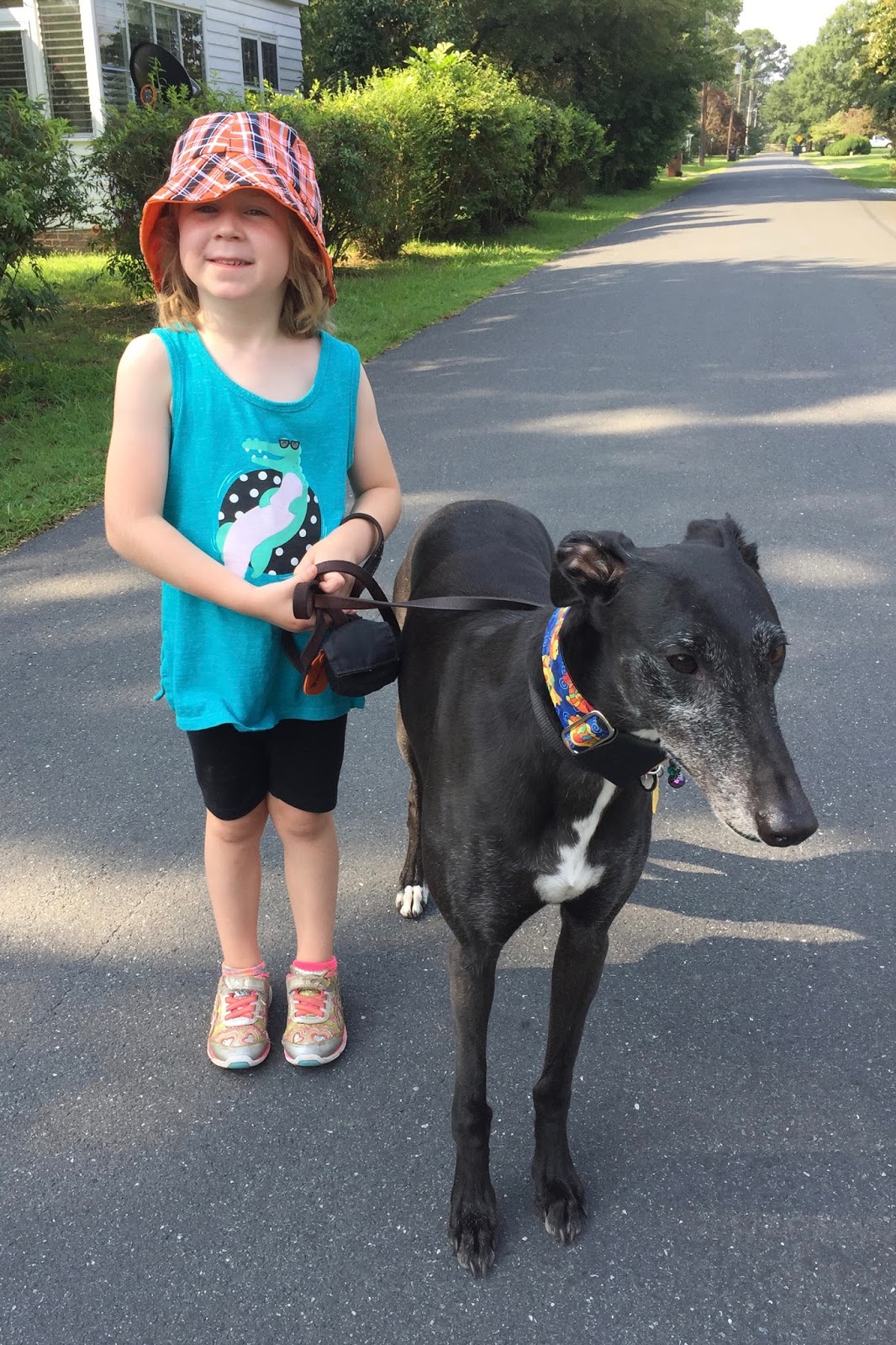
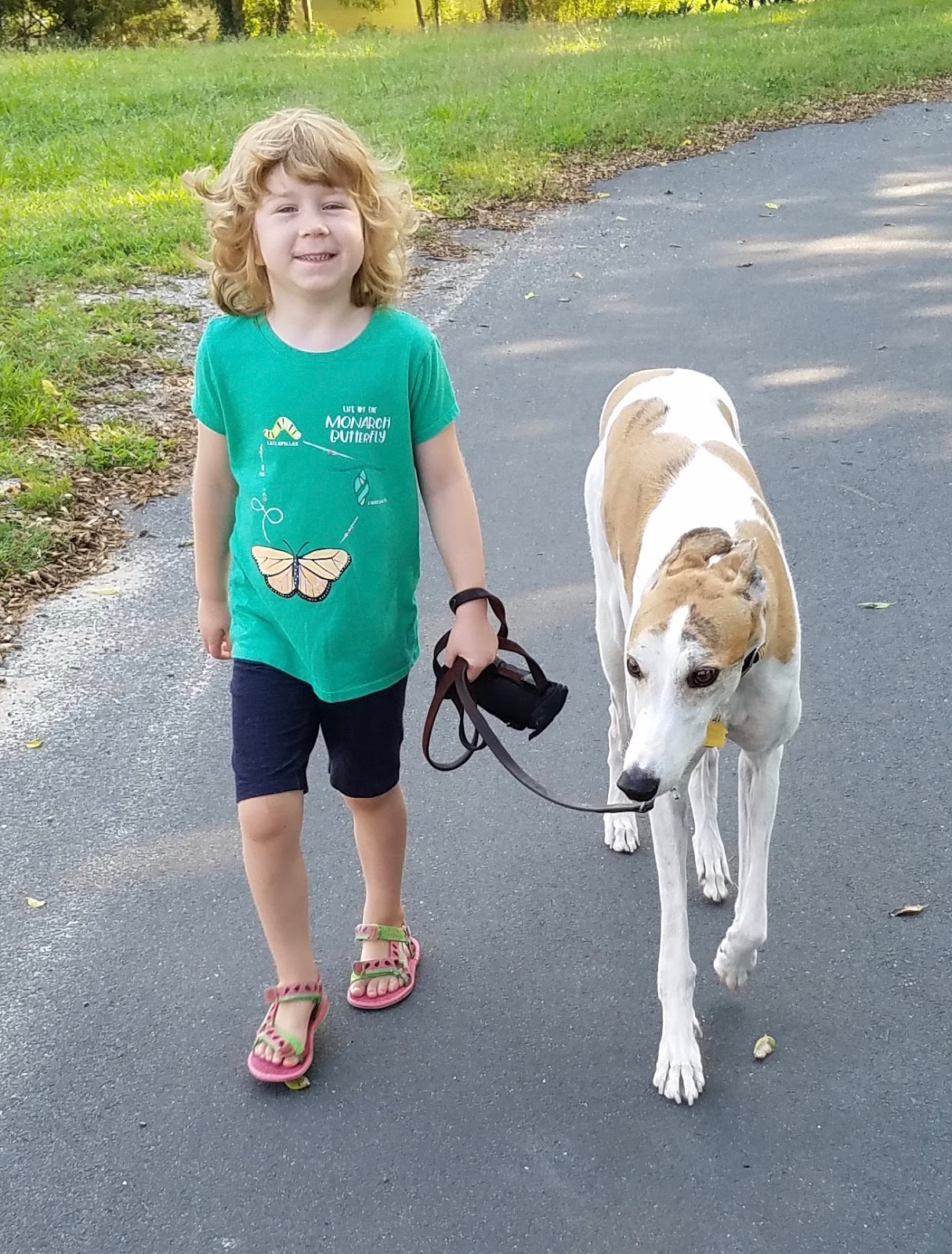
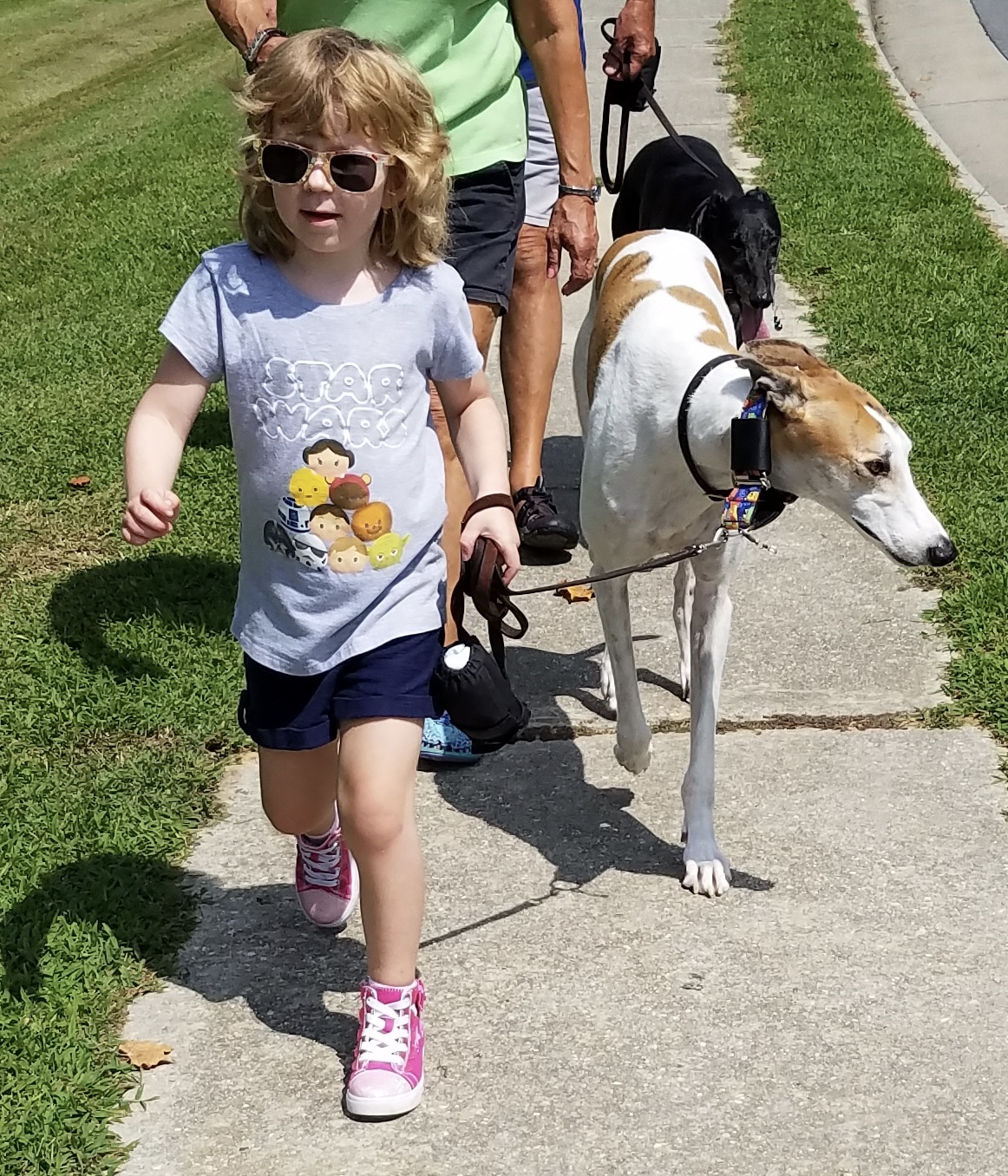
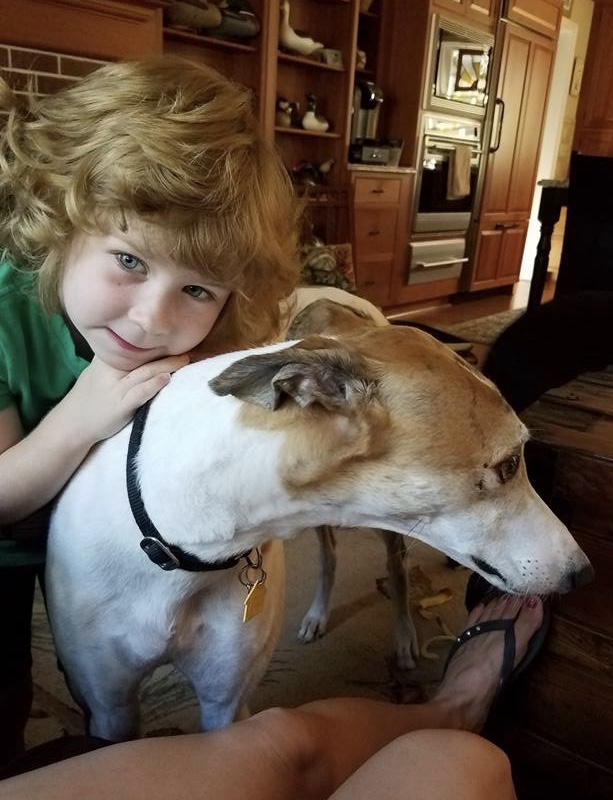
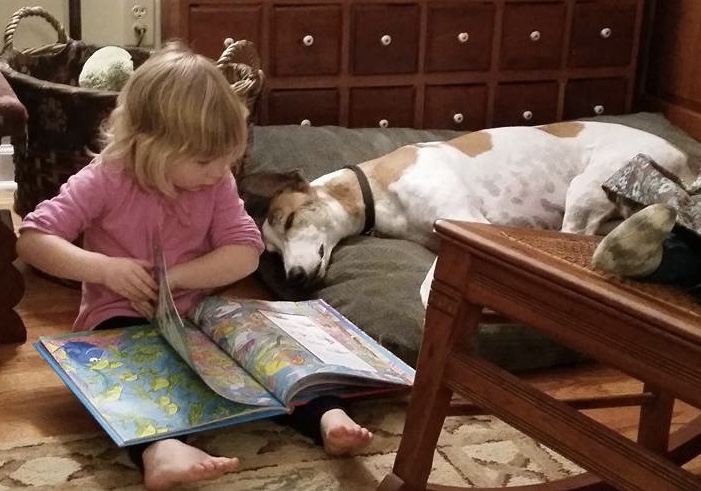
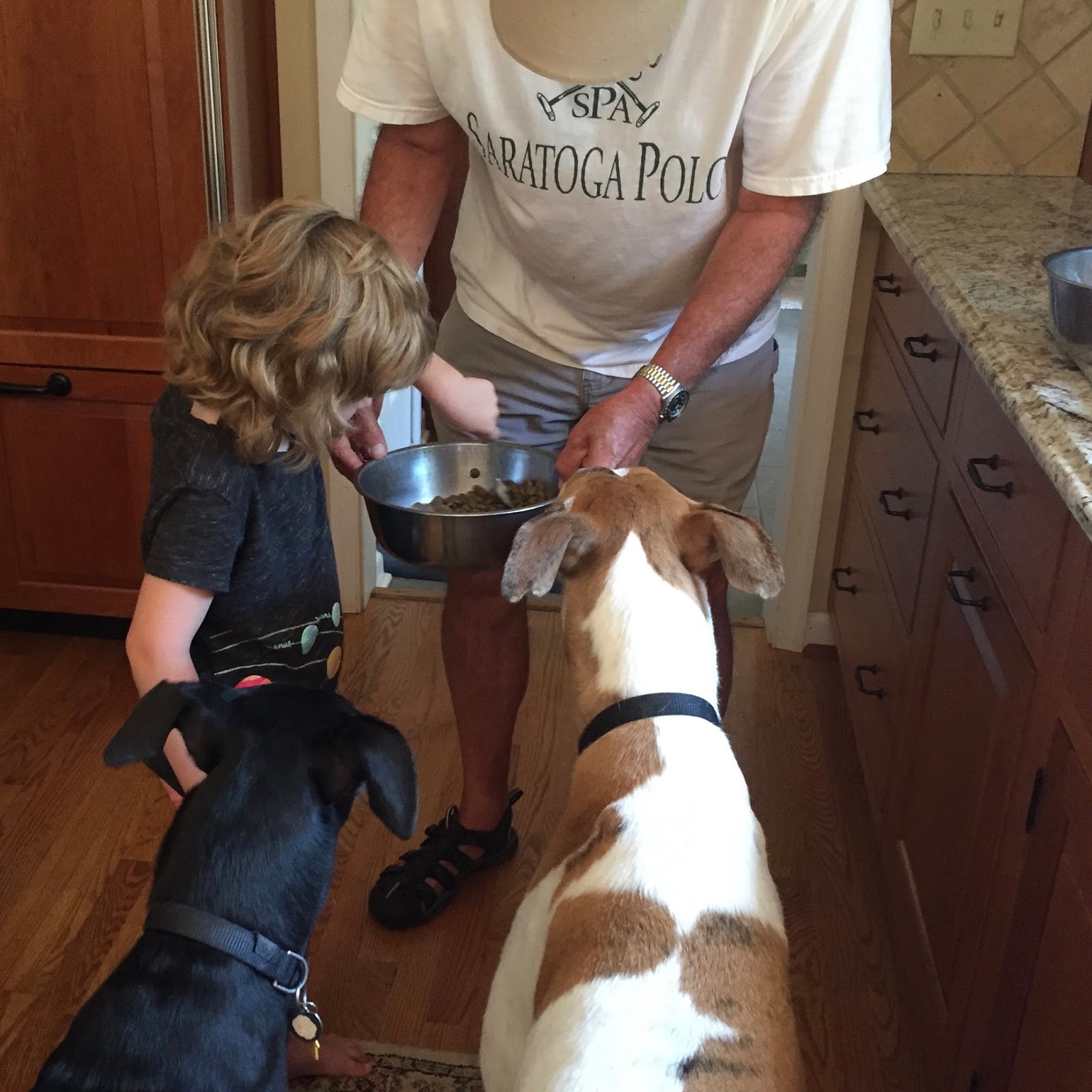
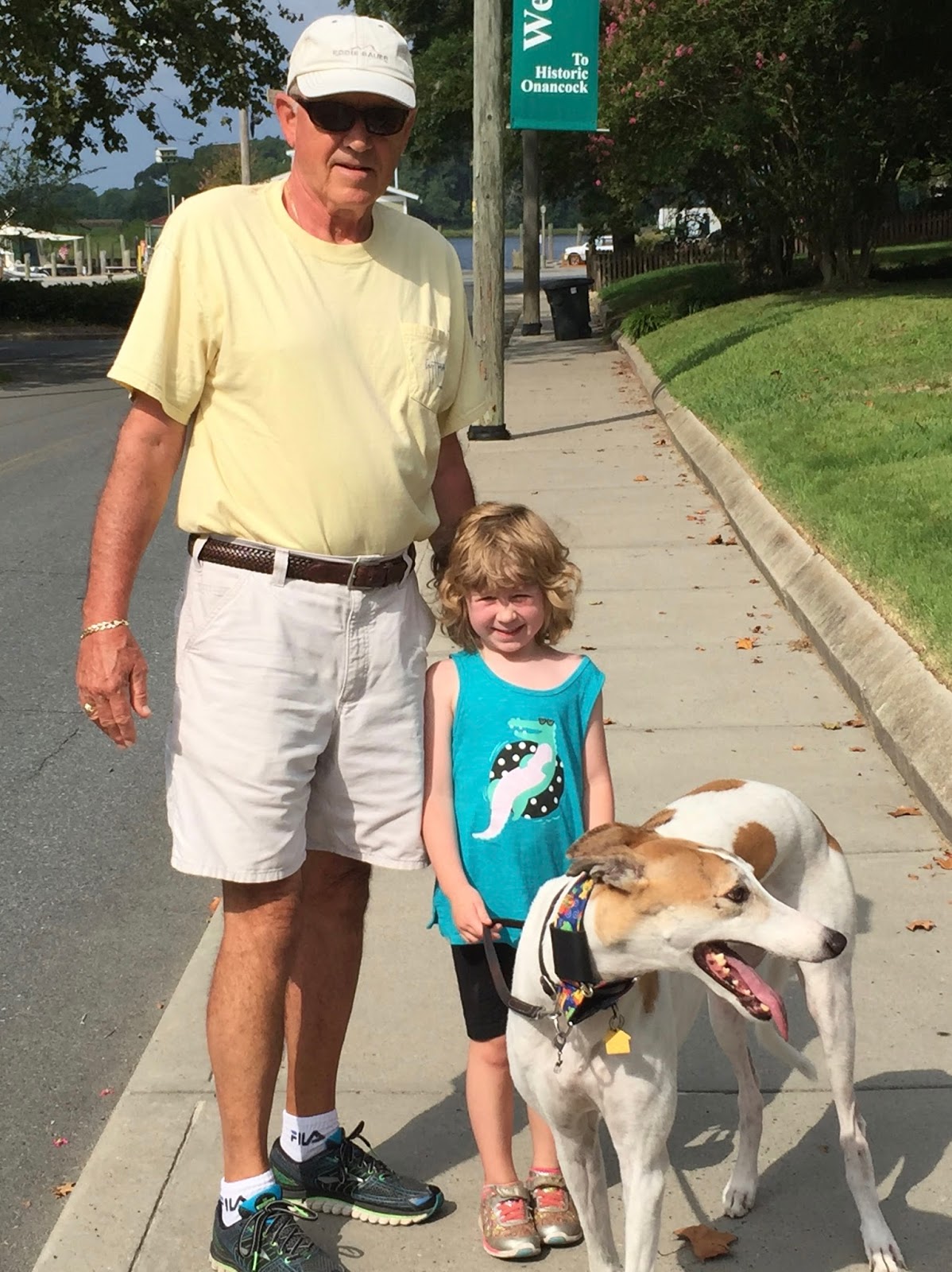
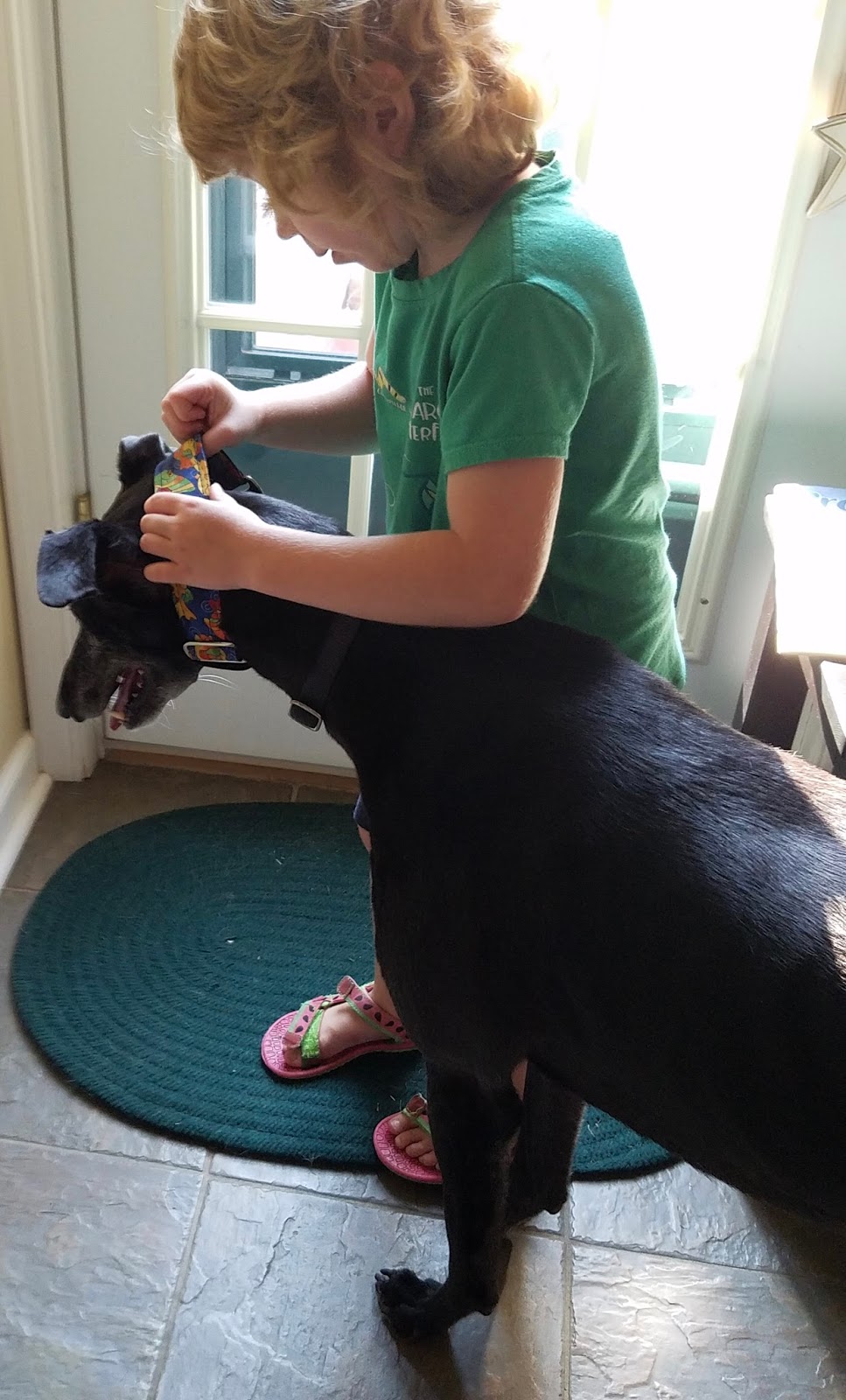
Summer is a wonderful time to spend with grandchildren.  Our lives proved lucky to have our granddaughter, Mollie, visiting us this past week.  She’s five years old, and she had never been with us at our home without her parents.  We prepared ourselves by anticipating activities she might like.  We explored several beaches, motored around in the boat, stopped by a friend’s farm to meet the animals, and had things at the house to keep her busy.  But, by far, she enjoyed the companionship of Kiowa and Emma the most.  

Quite the movie star
Our granddaughter loves our greyhounds, and they feel the same about her.  I felt this the perfect time to teach Mollie some dog safety rules.  She already knows not to put her face in the dogs’ faces and not to disturb them while eating or sleeping, but I thought it wise to expose her to some general rules about being safe.  

According to njsheltierescue.org, “the Humane Society of the United States says that 50 percent of children will be bitten by a dog before their twelfth birthday” with more bites connected to children under five.  Children dart around quicker than adults, and a dog’s chasing instinct and prey drive could be triggered.  
Their high pitched voices can surprise and alarm a dog.  They are also closer to the dog’s eye level which could prove threatening.  Less knowledge of dog body language limits a child’s ability to understand what the dog thinks.  Supervision of dog and child by a responsible adult goes without saying.

What a cutie!
All children need instruction when meeting a dog they do not know.  They should always ask the dog’s owner if petting the dog is allowed.  If the answer is yes, have them extend their hand with a closed fist, palm down, to let the dog sniff it.  If the dog isn’t interested, respect its space.  If the dog wants to be petted, pet his back not on the top of his head.   

Our greys are very mellow, don’t jump, and love Mollie.  Some other dogs may jump on small children so I spoke to Mollie about becoming a tree.  According to doggonesafe.com, dogs get bored with trees.  If a strange or too energetic dog approaches a small child, they should become a tree.  A tree stands perfectly still, tucks in its branches (arms), and looks at its roots grow (feet).  I explained that the excited dog will get bored (except, of course, if he’s a male dog, and he needs to lift his leg-LOL), and leave her alone.  She became the perfect tree.

Putting Kiowa to bed
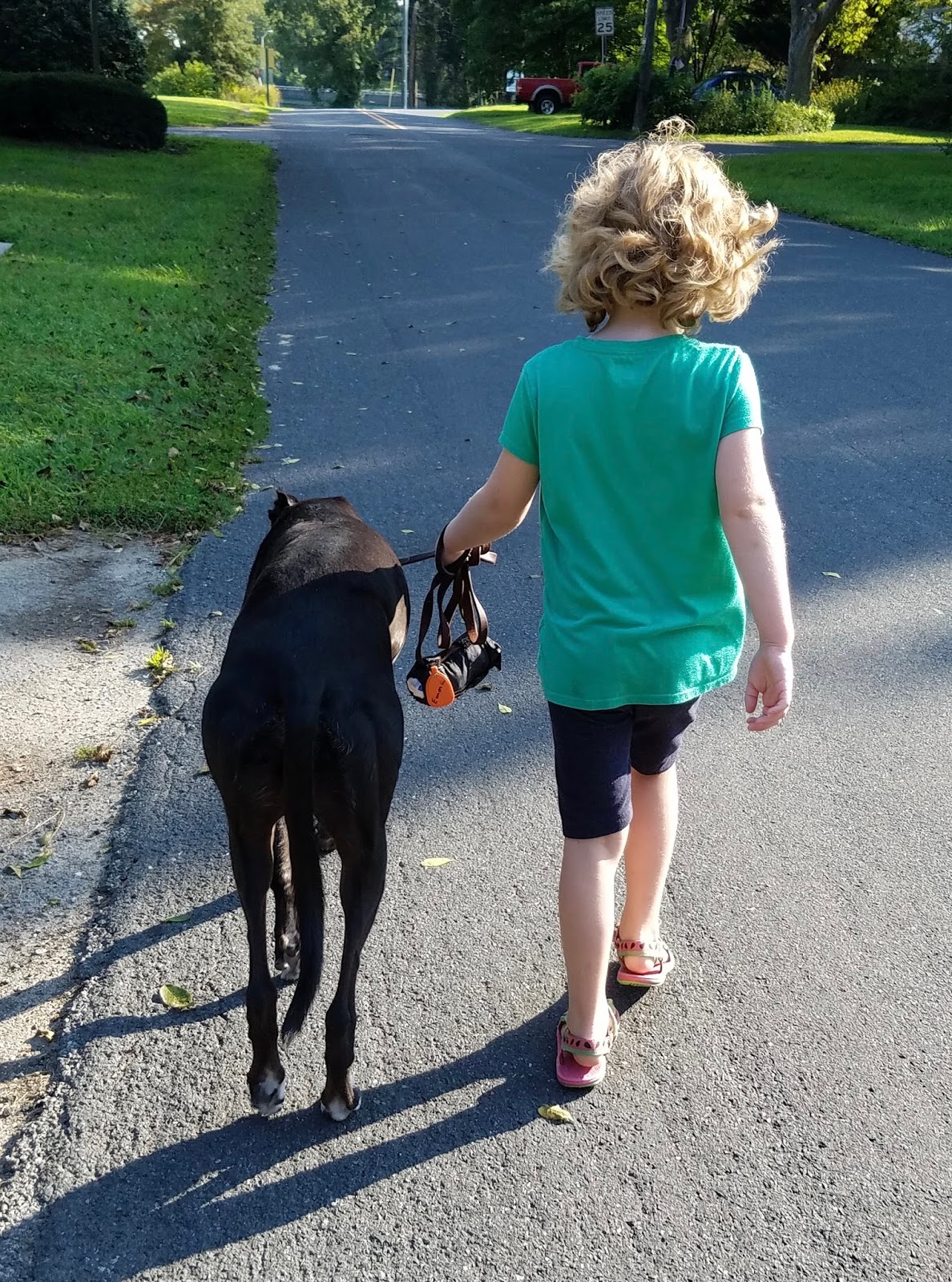
This year was the first time I allowed Mollie to walk one of the dogs without me holding part of the leash.  She learned how the leash goes around her wrist and how to shorten the leash so the dog walks right next to her.  We use a six foot regular leash.  She learned that the dog should be on her left side.  (Since she’s a leftie that wasn’t too difficult.)  I also explained that she needed to be the boss of the dog, to be kind but sternShe became a very astute dog walker while she visited us.

Njsheltierescue.org suggested some important rules for children’s safety around dogs:

Feeding the dogs with Pop Pop

  1. Never touch an unknown dog.
  2. Always ask permission from the owner before petting a dog.
  3. Respect the dog’s body space.
  4. Never stare at a dog or put your face close to a dog’s face.
  5. No teasing allowed.
  6. If a dog is tied up, keep hands to yourself.
  7. Respect the dog’s space while it is eating or sleeping.
  8. If dog is playing with a toy, leave him alone.
  9. Be a tree.  Don’t make loud noises or run away from a dog.  
  10. If you don’t know a dog’s intentions, back away to a safe place.
  11. If you see an unknown dog loose in your neighborhood, tell an adult.
  12. A dog is an animal not a cuddle toy.  Be gentle.


Nice Pose
These were just some of the rules in the article, Guide to Children and Dog Safety, on njsheltierescue.org.  If you want to read more, check it out.

Taking off a collar
We had a great Mollie visit, and she had a safe and fun time with Kiowa and Emma.  When she left with her parents to go home, she hugged the dogs good-bye first.  I guess you know where we are in the pecking order. 

Bye-Bye

Resources:

www.njsheltierescue.org:  Guide to Children and Dog Safety, Victoria Stilwell, 

www.doggonesafe.com:  Dog Bite Prevention Through Education, Dog Safety 
for Kids

www.avma.org:  Teaching Children How to Prevent Dog Bites


Saturday, July 29, 2017

A Mad Dash

Kazi


Summer fun on the way,
What will we do today?
Beach or park, walk or play,
Sun and heat, keep at bay.


Summer, the time for sun, fun, and adventure.  It may be sun and fun for you and your four-legged friends, but the adventure part may not be what either of you anticipated.  The heat and the sun can be both friend and foe.  Our pets can't tell us when their tolerance of heat has reached its peak.  We have to be on alert to any behaviors that signal their distress.  A few years ago, a summer adventure with my dogs turned into a mad dash for help.

I love Duckie
My husband and I and Rusty and Kazi,the greys before our present two, went for a short walk on a small beach not far from our home.  The beach was on a neck of land that was a distance from the main roads.  It was a warm day, but we knew our time there would be limited.  As we walked the beach, the dogs moseyed along side us, cooling their feet in the water.  Soon Kazi began to lag behind.  As I turned to her, I saw what I thought was her sticking her nose in the water.  Close to her nose seemed to be a foam. (I later realized she had vomited.)  As I looked to coax her along, I noticed her panting and staggering.  Since I was sure she hadn't had a cocktail, I urged my husband to get the car.  And the mad dash began.

Rusty and me
I had never seen heat stroke before, but I was pretty sure this was it.  After putting her in the car, we offered her some water, but she wasn’t interested.  (It would have been wiser to wet a towel in cool water wrapping it around her as she was transported.)  Of course, it had to be Sunday after 5 PM.  As my husband drove frantically down the road, I called the emergency number of my vet.  Being so far out on that neck, there was no signal.  I tried again and again.  Finally, a signal!  I left an anxious message and within 5 minutes, got a call back telling us to go directly to the vet’s office.  This gave us some relief, but we knew this was not good.

Mom dressed me up
again
Upon our arrival, Kazi was quickly lifted into a large tub, and we began to cool her down with a cool bath of water.  Periodically, we would take her rectal temperature.  It remained high, so we removed her from the tub.  The doctor, then, administered an intravenous fluid.  Eventually, this brought her temperature back down to normal as we all felt a surge of relief.  

Afterward, the vet thought it prudent to have her watched overnight.  We drove Kazi to an emergency clinic where she was cared for until the next morning.  After this scare, we became more alert to the heat and how it affects our dogs.

According to webvet.com, heat stroke, the common term for hyperthermia, requires "safe, controlled reduction of body temperature".  Cool water or towels "may be placed on head, stomach, underarms and feet".  Application of rubbing alcohol to
foot pads is also helpful.  Monitoring the rectal temperature until it returns to 103 degrees F is important.  Rectal temperature becomes life-threatening when it reaches 109 degrees F.

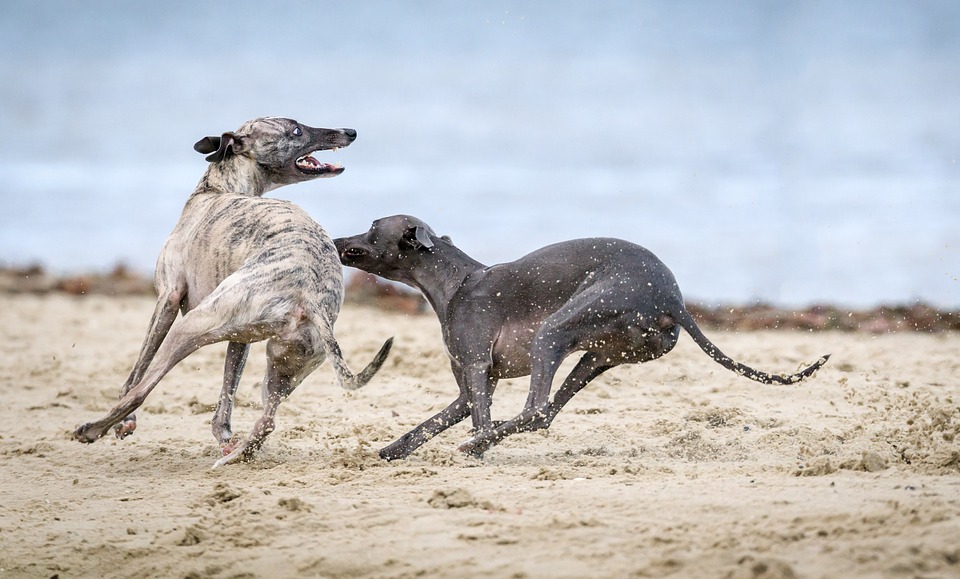
Dogs regulate their body temperature by panting which is less effective than perspiration.  We all know that leaving an animal in a car, even with windows open, in warm weather should never happen.  But leaving your dog outside for an extended period during hot weather or letting them run excessively can also cause heat stroke.

Webvet.com suggests:
Ready for fun
  - During hot weather, check your dog for the following:
- drooling or vomiting
- twitching muscles
- bloody diarrhea
- pale gums
- staggering or stumbling
- a wide eyed look
- difficulty breathing and increased heart rate
- 104 - 109 degree body temperature
If you suspect your dog of having heat stroke:
- Get your dog into the shade immediately and douse with cool 
    water.
  - Apply wet, cool towels to your animal as you transport them to the
  vet.
 
Have a great time this summer.  Play with your dogs and enjoy their company, but keep in mind that heat can be an enemy.  Be vigilant, and the mad dash you take will only be in fun. 


Resources:

Credit:  Written and review by John A. Bukowski, DVM. MPH, PHD and 
Susan E. Aiello, DVM, ELS


Friday, June 23, 2017

Veterinary Woes


images.google.com


Figure 8's, a path to test
Which one of us runs the best
              UNTIL
A hole, a twist, or a tree
Stands between that fun and me
   

Within the last year, my two furry children have decidedly made my life more challenging as well as costly.  Last October, I wrote about Emma who developed a genetic cataract in her right eye.  This prompted taking her first to our vet and then to a veterinary ophthalmologist an hour and a half away from our home.  Remember we live in a rural area of Virginia, and everything is an hour and a half away.  What followed was an expensive cataract operation, medication and treatment.  We still transport her periodically to the specialist for checkups, and eyedrops remain on her daily schedule. 

images.google.com
In addition, Kiowa recently presented us with his own medical issue.  I guess he didn’t want to be left out.  One day as usual, both grey kids were let out in the backyard to do their stuff.  Instead of concentrating on business, they began running around like maniacs.  (Who with a greyhound doesn’t understand this phenomenon.) Half way into it, Kiowa exploded with a blood-curdling scream.  Not a little cry, you understand, but a loud wrenching howl.  Back inside, I gave him a pain med and iced his leg.  (This boy is such a baby that I never know if the injury is really serious        or not.)  

Wikipedia.com
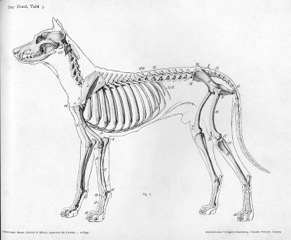
The next day, Kiowa’s leg ballooned. Visiting my local vet, they x-rayed his leg and prescribed anti-inflammatory medication.  The x-rays being inconclusive, I kept him quiet and gave him his medication.  The next week after the swelling went down, he was still hopping around so another appointment at the vet became necessary.   At his visit, the doctor discovered a definite problem.  The part of his rear back leg (known as the hock or metatarsal) showed a break in the bone which correlates to the top of a human foot.  The next step (so to speak) brought us face to face with a veterinary orthopedist (an hour and 45 minutes away) who recommended surgery. 

Why am I here?
Kiowa tends toward the art of the accident.  The last time he hurt himself, he ran into a tree in the backyard at night.  Why he was running around (yep, again) at that time in the evening still has me baffled.  He issued a wretched screech, and when brought in, had blood oozing from his nose.  Again, with the ice.  I iced his nose and cleaned the other wound on his forehead.  Of course, it was Sunday and at night, but luckily, my vet was on-call.  His last comment after our conversation was, “So much for him being a sighthound.”
  
I WANT OUT!
Now back to the present story.  Kiowa’s surgery, scheduled for the following week, brought new experiences to our lives.  He needed to be at the hospital between 8 and 8:30 the morning of surgery and needed to be picked up the following day.  We decided to stay overnight so picking him up would be easier.  On the day of surgery, the dogs, my husband and I left the house around 6:15 in the morning.  We dropped him off and were told that they would call us upon prepping him for surgery.  They finally called at 2:30, but he didn’t get into surgery until 4.  Here I thought that he would be in surgery early since he was there at 8 am!  (I know I like a doctor to be well rested before doing a procedure on me.) Oh, well, the best laid plans… 

Emma seems confused
Surgery went well, and we picked him up the next day accompanied by two pages of post-op care.  OMG!  After reading them, my blood pressure must have escalated.  I’m a pretty good nurse for my animals, but all the directions made me extremely nervous.  He had to be activity restricted for eight weeks, cold compresses the first week, warm compresses the second week, and three medications twice daily.  In addition to all of that, we still had to get him home without an injury to the affected leg.  I sat in the back seat the entire way home continuously reminding him to lie down.  It was not a pleasant trip.  

images.google.com
Two weeks have passed since surgery, and Kiowa is recuperating well.   The veterinary orthopedist had to place a plate and screws into his leg to stabilize it.  The incision is very clean although quite long, and he recently got his sutures removed.  He placed his injured foot down very soon after surgery, and so far, there is no limp when he walks. Except for the time spent in his crate, he seems happy.        

Needless to say, I have spent a ton of money on my babies this year.  Our previous dogs have never suffered these types of expensive ailments or injuries so I guess these two are making up for the others.  The question of buying animal health insurance comes up when things like this occur.  If these two dogs continue to follow their existing paths, I guess I will have to consider the option.

Sleepy time, but still confused

I love my dogs, and I want the best possible care for them.  I guess saying that, these unexpected costs are just part of their package.  After all, the love and laughter they give to us comes without any strings.  Maybe in my next life, my career choice should reflect my love of pets and my pocketbook, like maybe, I should become a veterinarian.